Chapter 1
Chapter 1
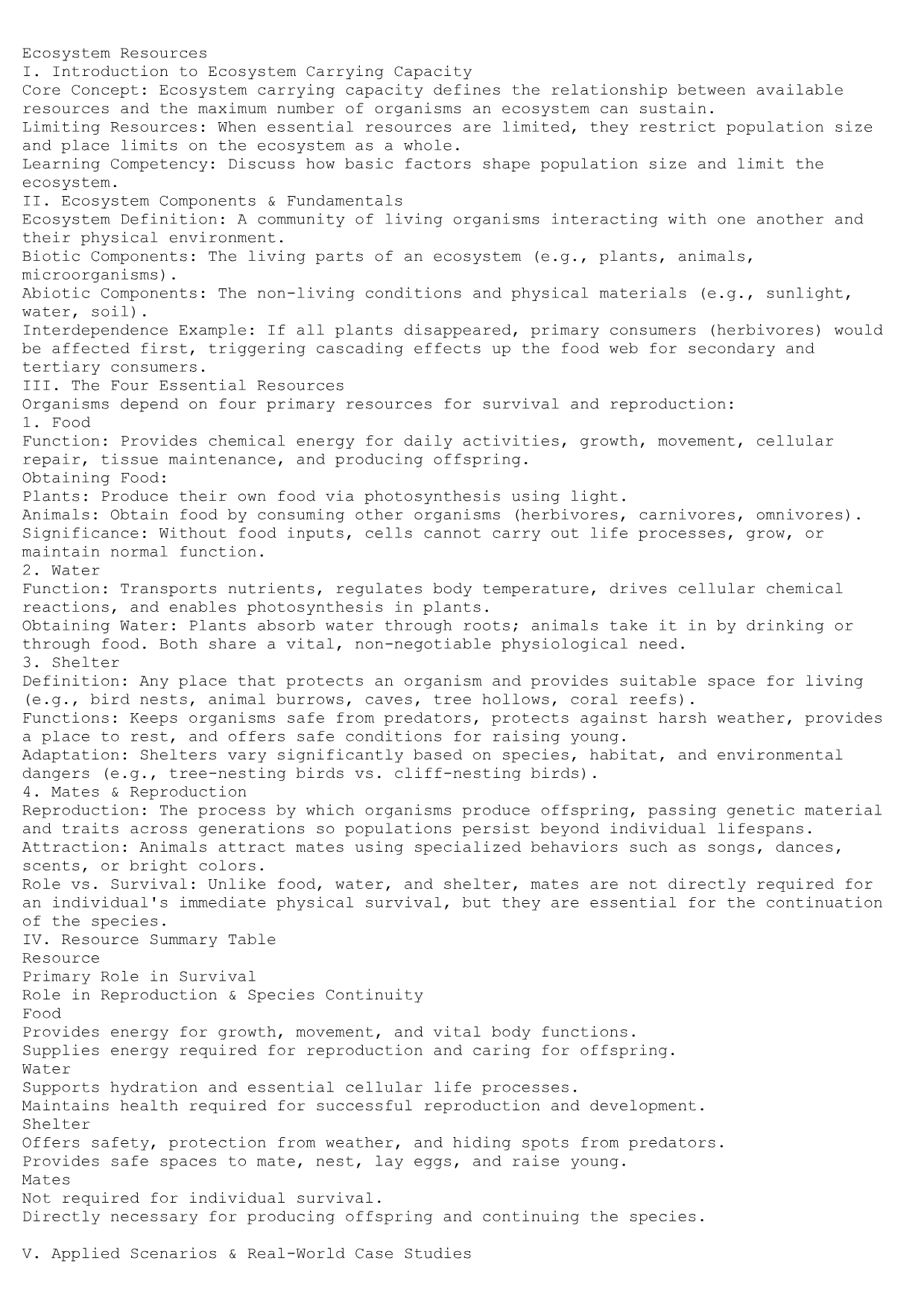
Ecosystem Resources One. Introduction to Ecosystem Carrying Capacity Core Concept: Ecosystem carrying capacity defines the relationship between available resources and the maximum number of organisms an ecosystem can sustain. Limiting Resources: When essential resources are limited, they restrict population size and place limits on the ecosystem as a whole. Learning Competency: Discuss how basic factors shape population size and limit the ecosystem. Two. Ecosystem Components and Fundamentals Ecosystem Definition: A community of living organisms interacting with one another and their physical environment. Biotic Components: The living parts of an ecosystem (e.g., plants, animals, microorganisms). Abiotic Components: The non-living conditions and physical materials (e.g., sunlight, water, soil). Interdependence Example: If all plants disappeared, primary consumers (herbivores) would be affected first, triggering cascading effects up the food web for secondary and tertiary consumers. Three. The Four Essential Resources Organisms depend on four primary resources for survival and reproduction: One. Food Function: Provides chemical energy for daily activities, growth, movement, cellular repair, tissue maintenance, and producing offspring. Obtaining Food: Plants: Produce their own food via photosynthesis using light. Animals: Obtain food by consuming other organisms (herbivores, carnivores, omnivores). Significance: Without food inputs, cells cannot carry out life processes, grow, or maintain normal function. Two. Water Function: Transports nutrients, regulates body temperature, drives cellular chemical reactions, and enables photosynthesis in plants. Obtaining Water: Plants absorb water through roots; animals take it in by drinking or through food. Both share a vital, non-negotiable physiological need. Three. Shelter Definition: Any place that protects an organism and provides suitable space for living (e.g., bird nests, animal burrows, caves, tree hollows, coral reefs). Functions: Keeps organisms safe from predators, protects against harsh weather, provides a place to rest, and offers safe conditions for raising young. Adaptation: Shelters vary significantly based on species, habitat, and environmental dangers (e.g., tree-nesting birds vs. cliff-nesting birds). Four. Mates and Reproduction Reproduction: The process by which organisms produce offspring, passing genetic material and traits across generations so populations persist beyond individual lifespans. Attraction: Animals attract mates using specialized behaviors such as songs, dances, scents, or bright colors. Role vs. Survival: Unlike food, water, and shelter, mates are not directly required for an individual's immediate physical survival, but they are essential for the continuation of the species. Four. Resource Summary Table Resource Primary Role in Survival Role in Reproduction and Species Continuity Food Provides energy for growth, movement, and vital body functions. Supplies energy required for reproduction and caring for offspring. Water Supports hydration and essential cellular life processes. Maintains health required for successful reproduction and development. Shelter Offers safety, protection from weather, and hiding spots from predators. Provides safe spaces to mate, nest, lay eggs, and raise young. Mates Not required for individual survival. Directly necessary for producing offspring and continuing the species. Five. Applied Scenarios and Real-World Case Studies
Ecosystem Carrying Capacity How Basic Resources Support Life in an Ecosystem
Ecosystem Carrying Capacity How Basic Resources Support Life in an Ecosystem
Every ecosystem has a limit to the number of organisms it can support based on essential resources.
Food: Provides the energy organisms need to grow, survive, and reproduce. When more food is available, more individuals can survive until other resources become limiting. Shelter: Protects organisms from predators and harsh weather while providing a place to rest and raise young. Without enough shelter, fewer individuals survive and reproduce. Water: Essential for all living organisms. Animals need water for drinking and body functions, while plants need it for photosynthesis, nutrient transport, and growth.