
'%3e%3cpath%20d='M13%2019.938C15.0173%2019.6813%2016.8611%2018.6661%2018.1568%2017.0988C19.4525%2015.5314%2020.1027%2013.5295%2019.9754%2011.5C19.848%209.47041%2018.9527%207.56549%2017.4713%206.17238C15.9898%204.77927%2014.0336%204.00252%2012%204C9.96396%203.99848%208.00395%204.77334%206.51934%206.16668C5.03473%207.56002%204.13724%209.46699%204.00974%2011.499C3.88225%2013.5311%204.53434%2015.5353%205.83314%2017.1033C7.13195%2018.6712%208.97974%2019.685%2011%2019.938V14H9V12H11V10.346C11%209.009%2011.14%208.524%2011.4%208.035C11.6561%207.55119%2012.052%207.15569%2012.536%206.9C12.918%206.695%2013.393%206.572%2014.223%206.519C14.552%206.498%2014.978%206.524%2015.501%206.599V8.499H15C14.083%208.499%2013.704%208.542%2013.478%208.663C13.3431%208.73236%2013.2334%208.84215%2013.164%208.977C13.044%209.203%2013%209.427%2013%2010.345V12H15.5L15%2014H13V19.938ZM12%2022C6.477%2022%202%2017.523%202%2012C2%206.477%206.477%202%2012%202C17.523%202%2022%206.477%2022%2012C22%2017.523%2017.523%2022%2012%2022Z'%20fill='black'/%3e%3c/g%3e%3cdefs%3e%3cclipPath%20id='clip0_2995_1615'%3e%3crect%20width='24'%20height='24'%20fill='white'/%3e%3c/clipPath%3e%3c/defs%3e%3c/svg%3e)
'%3e%3cpath%20d='M12%209C11.2044%209%2010.4413%209.31607%209.87868%209.87868C9.31607%2010.4413%209%2011.2044%209%2012C9%2012.7956%209.31607%2013.5587%209.87868%2014.1213C10.4413%2014.6839%2011.2044%2015%2012%2015C12.7956%2015%2013.5587%2014.6839%2014.1213%2014.1213C14.6839%2013.5587%2015%2012.7956%2015%2012C15%2011.2044%2014.6839%2010.4413%2014.1213%209.87868C13.5587%209.31607%2012.7956%209%2012%209ZM12%207C13.3261%207%2014.5979%207.52678%2015.5355%208.46447C16.4732%209.40215%2017%2010.6739%2017%2012C17%2013.3261%2016.4732%2014.5979%2015.5355%2015.5355C14.5979%2016.4732%2013.3261%2017%2012%2017C10.6739%2017%209.40215%2016.4732%208.46447%2015.5355C7.52678%2014.5979%207%2013.3261%207%2012C7%2010.6739%207.52678%209.40215%208.46447%208.46447C9.40215%207.52678%2010.6739%207%2012%207ZM18.5%206.75C18.5%207.08152%2018.3683%207.39946%2018.1339%207.63388C17.8995%207.8683%2017.5815%208%2017.25%208C16.9185%208%2016.6005%207.8683%2016.3661%207.63388C16.1317%207.39946%2016%207.08152%2016%206.75C16%206.41848%2016.1317%206.10054%2016.3661%205.86612C16.6005%205.6317%2016.9185%205.5%2017.25%205.5C17.5815%205.5%2017.8995%205.6317%2018.1339%205.86612C18.3683%206.10054%2018.5%206.41848%2018.5%206.75ZM12%204C9.526%204%209.122%204.007%207.971%204.058C7.187%204.095%206.661%204.2%206.173%204.39C5.739%204.558%205.426%204.759%205.093%205.093C4.78001%205.3954%204.53935%205.76458%204.389%206.173C4.199%206.663%204.094%207.188%204.058%207.971C4.006%209.075%204%209.461%204%2012C4%2014.474%204.007%2014.878%204.058%2016.029C4.095%2016.812%204.2%2017.339%204.389%2017.826C4.559%2018.261%204.759%2018.574%205.091%2018.906C5.428%2019.242%205.741%2019.443%206.171%2019.609C6.665%2019.8%207.191%2019.906%207.971%2019.942C9.075%2019.994%209.461%2020%2012%2020C14.474%2020%2014.878%2019.993%2016.029%2019.942C16.811%2019.905%2017.338%2019.8%2017.826%2019.611C18.259%2019.442%2018.574%2019.241%2018.906%2018.909C19.243%2018.572%2019.444%2018.259%2019.61%2017.829C19.8%2017.336%2019.906%2016.809%2019.942%2016.029C19.994%2014.925%2020%2014.539%2020%2012C20%209.526%2019.993%209.122%2019.942%207.971C19.905%207.189%2019.8%206.661%2019.61%206.173C19.4593%205.765%2019.2191%205.39596%2018.907%205.093C18.6047%204.77985%2018.2355%204.53917%2017.827%204.389C17.337%204.199%2016.811%204.094%2016.029%204.058C14.925%204.006%2014.539%204%2012%204ZM12%202C14.717%202%2015.056%202.01%2016.122%202.06C17.187%202.11%2017.912%202.277%2018.55%202.525C19.21%202.779%2019.766%203.123%2020.322%203.678C20.8305%204.1779%2021.224%204.78259%2021.475%205.45C21.722%206.087%2021.89%206.813%2021.94%207.878C21.987%208.944%2022%209.283%2022%2012C22%2014.717%2021.99%2015.056%2021.94%2016.122C21.89%2017.187%2021.722%2017.912%2021.475%2018.55C21.2247%2019.2178%2020.8311%2019.8226%2020.322%2020.322C19.822%2020.8303%2019.2173%2021.2238%2018.55%2021.475C17.913%2021.722%2017.187%2021.89%2016.122%2021.94C15.056%2021.987%2014.717%2022%2012%2022C9.283%2022%208.944%2021.99%207.878%2021.94C6.813%2021.89%206.088%2021.722%205.45%2021.475C4.78233%2021.2245%204.17753%2020.8309%203.678%2020.322C3.16941%2019.8222%202.77593%2019.2175%202.525%2018.55C2.277%2017.913%202.11%2017.187%202.06%2016.122C2.013%2015.056%202%2014.717%202%2012C2%209.283%202.01%208.944%202.06%207.878C2.11%206.812%202.277%206.088%202.525%205.45C2.77524%204.78218%203.1688%204.17732%203.678%203.678C4.17767%203.16923%204.78243%202.77573%205.45%202.525C6.088%202.277%206.812%202.11%207.878%202.06C8.944%202.013%209.283%202%2012%202Z'%20fill='black'/%3e%3c/g%3e%3cdefs%3e%3cclipPath%20id='clip0_2995_1620'%3e%3crect%20width='24'%20height='24'%20fill='white'/%3e%3c/clipPath%3e%3c/defs%3e%3c/svg%3e)

Multilingual research tools, especially AI-powered text-to-speech tools, are reshaping how researchers access and engage with scholarly content across languages. These tools break down linguistic barriers, boost productivity, and enhance accessibility, empowering researchers to collaborate internationally with ease.
Features such as skipping citations and references provide a smoother listening experience, while playback speed control and section-specific navigation help users efficiently pinpoint relevant information. Additionally, these tools effortlessly handle various document formats, including PDFs, Word files, and even images, making research materials widely accessible.
Why it matters: TTS tools like Listening enable researchers to absorb information faster, retain more, and collaborate across languages. Whether you’re reviewing papers, learning new terms, or multitasking, TTS technology makes academic work more accessible and efficient.
AI Multilingual Research Tools Key Takeaways
- Enhances Multilingual Research Accessibility: Converts academic content into clear, natural-sounding audio across various languages, accurately pronouncing complex terms to help researchers overcome language barriers.
- Supports Inclusive Multilingual Research: Provides customizable audio experiences beneficial to visually impaired users, dyslexic readers, and auditory learners, making multilingual academic materials accessible to diverse audiences.
- Increases Multilingual Research Productivity: Enables researchers to multitask effectively—listening to scholarly materials during commutes, exercise, or routine tasks, thereby maximizing their research productivity across multiple languages.


What Is Multilingual Research Tools?
Multilingual Research AI refers to artificial intelligence technologies specifically designed to facilitate academic research across multiple languages. These tools typically integrate capabilities like advanced translation, precise pronunciation of complex terminology, and multilingual text-to-speech features.
By breaking language barriers, Multilingual Research AI enables scholars from diverse linguistic backgrounds to easily access, interpret, and collaborate on academic content, significantly enhancing cross-cultural understanding and global research productivity.
Multilingual Research Tools Basics
AI-driven text-to-speech (TTS) technology is changing how researchers engage with academic content. These systems can handle complex academic language and deliver smooth, natural audio in multiple languages, making research materials easier to access and understand. Let’s dive into how neural systems make this possible.
Neural TTS Systems
Neural TTS relies on deep learning algorithms to create speech that sounds natural, with proper rhythm and intonation – avoiding the mechanical tone of older systems. Many users have praised its quality.
“Great way to listen to papers during my commute. Finally, a voice that doesn’t sound like a robot”.
Here’s what makes neural TTS especially useful for academic work:
- Handles complex scientific terms with precision
- Maintains a natural flow, even in highly technical content
- Offers playback speed control (up to 3x) without losing clarity
- Supports various document formats like PDFs, Word files, and even images
Multilingual Support Features
These systems are designed to process academic papers efficiently by:
- Automatically detecting and managing citations
- Skipping references and footnotes for smoother listening
- Allowing playback of specific sections for focused study
- Accurately handling technical terms in different languages
These features resonate with users. Róisín Hennessy highlights its thoughtful design:
“This app was clearly created by people who care! My favorite part is that you can turn off citations so the text reads smoothly, and you can easily skip unimportant information”.
The system’s ability to pronounce scientific terms accurately is another standout feature. Samantha Lumby shares:
“Absolutely brilliant, haven’t been able to find an app that can say scientific words properly until now. Very easy to use”.
For researchers working across languages, these tools offer key benefits:
| Feature | Benefit |
|---|---|
| Language Detection | Processes multiple languages seamlessly |
| Academic Terminology | Pronounces complex terms correctly in various languages |
| Citation Management | Skips citations without disrupting the flow |
| Section Navigation | Focuses on specific sections for targeted research |
| Speed Control | Adjusts playback speed while keeping audio clear |
These systems also improve over time through user feedback. Researchers can report mispronunciations, helping refine the tool’s ability to handle specialized academic terms across languages. This feedback loop ensures the technology continues to meet the needs of its users.
Multilingual Research Tools Advantages
Cross-Language Access
AI-powered text-to-speech (TTS) tools make academic research more accessible by accurately pronouncing complex technical terms across multiple languages. This feature supports seamless international collaboration and helps researchers overcome language barriers.
“Great app! Helpful for academics. I’ve been using this app to listen to scholarly articles, and it’s great. Works as promised: good at skipping content that doesn’t need to be read aloud; good at translating niche terms into audio. Highly recommend for anyone who has to read a lot of academic content.” – Read E
Research Access for All
TTS technology promotes inclusivity by providing clear audio options tailored to various learning and accessibility needs. It’s particularly helpful for individuals with visual impairments or dyslexia, offering features like synchronized text-audio displays and adjustable settings.
| User Group | Benefits |
|---|---|
| Visually Impaired | Clear audio output, navigation by sections, adjustable playback settings |
| Dyslexic Readers | Synchronized text-audio display, customizable reading speed |
| ESL Researchers | Accurate pronunciation of terms, better understanding of technical jargon |
“Brilliant app! I have dyslexia and have previously used Otter, Text Help, and Glean. This reader outshines all dramatically… My favorite part is that you can turn off citations so the text reads smoothly, and you can easily skip unimportant information.” – Róisín Hennessy
Multitasking Capabilities
TTS tools not only support language and accessibility needs but also improve productivity by allowing researchers to multitask. Over 50,000 students and researchers already use TTS technology, incorporating academic work into their daily lives with ease.
“Perfect for converting large texts into audio. And when they added support for parallel reading along with the audio – I was blown away! It became significantly faster, easier, and clearer to absorb textbooks.” – Meloman F.
Here’s how researchers use TTS to integrate learning into everyday activities:
| Activity | How TTS Fits In |
|---|---|
| Commuting | Listen to research papers while traveling |
| Exercise | Absorb content during workouts |
| Household Tasks | Review studies while doing chores |
| Walking | Combine study time with physical activity |
“This app legit turns anything into a podcast you can listen to in seconds. I can finally listen to all the newsletters and essays I’m subscribed to without spending hours in my email inbox! In particular, I appreciate using this app for long walks, chores around the house, and exercise.” – Brea T.
Multilingual Research Tools Applications
AI-powered text-to-speech (TTS) tools are transforming research by making academic content easier to access and interact with.
Paper Audio Conversion with Listening
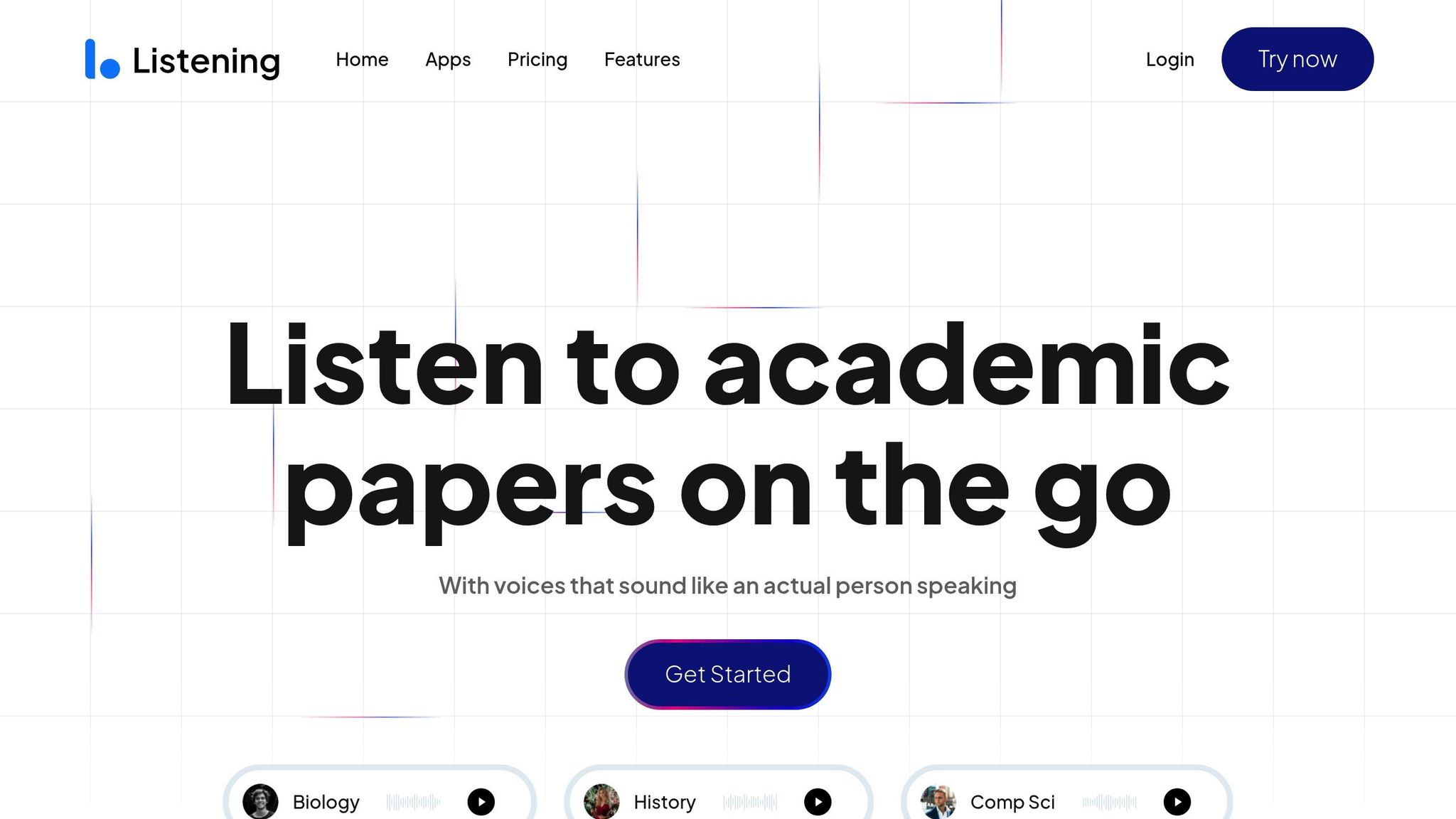
Listening turns academic papers into audio files, streamlining the process of reviewing literature. By supporting various document formats, it transforms research materials into easy-to-digest audio content.
“Amazing! This is my new favorite app! Uploading PDFs is so easy on the phone, and the narration sounds very natural! Perfect for listening to academic papers (or any other texts) – so convenient and saves so much time!”
– Baobei de Bei
Here’s how Listening enhances research:
| Feature | Benefit |
|---|---|
| Section Selection | Lets you focus on specific parts of a paper, like the abstract or results |
| Citation Skipping | Skips over references, creating a smoother listening experience |
| Speed Control | Adjust playback speed (0.5× to 4×) to suit your pace |
| One-Click Notes | Captures key points automatically for quick reference |
These features don’t just make research easier – they also support language learning and content creation.
Language Learning Support
TTS tools go beyond simple text conversion by helping users understand complex, multilingual terminology. With natural-sounding AI voices, they ensure accurate pronunciation of even the toughest technical terms. Pairing audio with text further strengthens comprehension.
“The reading voice is pleasant and understandable, even on the harder words. Having the text available to read along helps also.”
– Mary Ballard-Johansson
Multilingual Content Creation
Listening also simplifies working with multilingual academic content, breaking down language barriers in research.
| Application | Benefit |
|---|---|
| Technical Terms | Pronounces scientific vocabulary accurately |
| Cross-language Review | Makes reviewing research in different languages more efficient |
| Content Validation | Offers an audio preview for translated materials |
| Accessibility | Supports visually impaired researchers effectively |
“Absolutely brilliant, haven’t been able to find an app that can say scientific words properly until now. Very easy to use.”
– Samantha Lumby
“LOVE this! I’m a grad student full-time who also works full-time and drives long distances. This is a LIFESAVER!”
– Mandy Eversole
Multilingual Research AI Tech Developments
AI-driven text-to-speech (TTS) tools have made strides in delivering academic content more effectively. These advancements go beyond earlier features, improving how accessible and user-friendly academic materials are.
Speech Pattern Improvements
AI voices have become much more lifelike, offering smoother and more natural speech. They can now handle challenging academic terms with impressive precision, making it easier for researchers to consume complex scholarly material.
| Feature | Benefit for Researchers |
|---|---|
| Natural Prosody | Clearer and more fluid delivery of technical content |
| Scientific Term Recognition | Precise pronunciation of specialized vocabulary |
Translation Integration
The integration of translation features in TTS tools allows researchers to:
- Access research from around the globe with ease
- Navigate complex terms in different languages
- Ensure accurate translations of academic texts
- Collaborate more effectively with peers worldwide
Expanded Language Support
With better speech synthesis and translation features, TTS tools are now supporting a broader range of languages. This includes accurately pronouncing academic terms, which is crucial for global research efforts.
| Language Capability | Benefit for Research |
|---|---|
| Specialized Vocabulary | Correct pronunciation of technical terms |
| Feedback Mechanisms | Users can report errors for ongoing updates |
| Multi-language Processing | Effortless switching between different languages |
“Amazing! This is my new favorite app! Uploading PDFs is so easy on the phone, and the narration sounds very natural! Perfect for listening to academic papers (or any other texts) – so convenient and saves so much time!” – Baobei de Bei
Conclusion
AI text-to-speech technology has changed how we engage with multilingual academic content, offering both accuracy and ease of use. Its growing popularity is reshaping academic workflows in meaningful ways.
Here’s how TTS tools address key challenges:
| Benefit | How It Helps |
|---|---|
| Learning on the Go | Academic papers can be converted into audio for convenient, mobile learning |
| Pronunciation Aid | Provides correct pronunciations of complex terms in various languages |
| Multitasking | Allows users to listen while handling other tasks, boosting efficiency |
| Better Retention | Audio learning helps reinforce and retain information effectively |
As this technology advances, it will continue to break down language barriers and make academic resources more accessible to scholars everywhere.
FAQs
How does AI text-to-speech handle accurate pronunciation of complex scientific terms across different languages?
AI text-to-speech technology ensures accurate pronunciation of complex scientific terms by leveraging advanced algorithms and extensive linguistic datasets. These systems analyze language patterns, phonetics, and context to produce natural, human-like pronunciation, even for highly technical or specialized vocabulary.
Additionally, tools like Listening are designed to adapt to multiple languages and disciplines, offering precise pronunciation tailored to the needs of academic research. This makes it easier for researchers to understand content in various fields without struggling with mispronunciations or language barriers.
How do AI text-to-speech multilingual research tools improve accessibility for researchers with visual impairments or dyslexia?
AI text-to-speech tools, like Listening, make academic research more accessible for individuals with visual impairments or dyslexia by converting text into natural, human-like audio. This allows researchers to engage with complex materials such as academic papers, documents, and websites without relying on visual reading.
Key features include the ability to skip citations and references, focus on specific sections, and listen on the go. These tools simplify the process of consuming information, making it easier to comprehend and retain key insights, especially for those who may find traditional reading methods challenging.
How can AI text-to-speech tools help researchers stay productive while multitasking?
AI text-to-speech tools, like Listening, allow researchers to stay productive by enabling them to consume academic content while managing other tasks. Instead of being tied to a screen, users can listen to research papers, documents, or emails during commutes, workouts, or while completing routine chores.
These tools save time by making it easier to absorb information on the go, and features like skipping citations or focusing on specific sections ensure the experience is both efficient and tailored to the user’s needs. With human-like voice synthesis, it feels natural and engaging, making multitasking more seamless than ever.
How do multilingual research tools enhance international academic collaboration?
Multilingual research tools significantly enhance international collaboration by enabling researchers from diverse linguistic backgrounds to easily share, interpret, and discuss academic content. By providing accurate translations, precise pronunciation of technical terms, and seamless navigation across languages, these tools streamline global scholarly communication.
Can multilingual research tools help non-native speakers better understand complex academic materials?
Yes, multilingual research tools greatly assist non-native speakers by offering clear translations, synchronized text-to-audio playback, and correct pronunciation of specialized academic vocabulary. These features improve comprehension and allow researchers to engage confidently with scholarly content across languages.
What are the advantages of using multilingual research tools in academic settings?
Integrating multilingual research tools into academic environments improves accessibility, boosts student and researcher engagement, and supports diverse learning styles. Students and researchers can effectively access and absorb scholarly materials in their preferred languages and formats, enhancing overall academic performance and international research capabilities.